By: Eliana Nitsberg ’28
Dr. Danielle Gilbert, Pine Crest alumna of the Class of 2004 and Assistant Professor of Political Science at Northwestern University, recently returned to campus on March 5, 2026 where she shared her experiences as a student at Pine Crest and her journey to a successful career in political science. During her visit, the Pine Crest “lifer” (a graduate who attended Pine Crest from pre-kindergarten) saw how student life has evolved over the years.
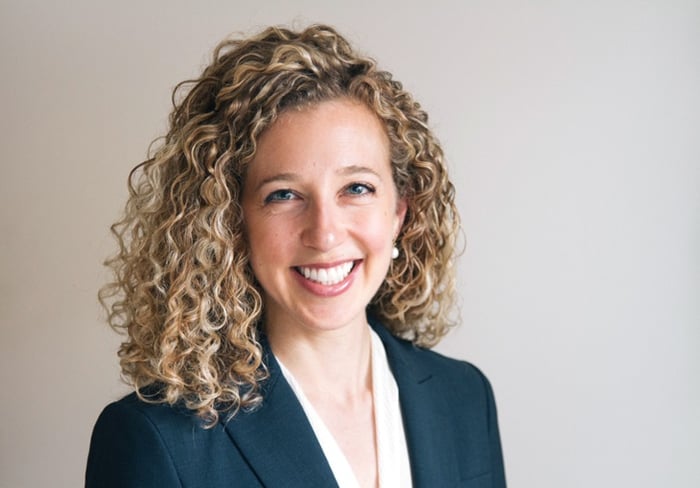
Even with new programs and infrastructure, something that has always been a key component of the Pine Crest experience is the emphasis on promoting an intellectually stimulating environment, according to Dr. Gilbert. She stated, “Something that I often reminisce with fellow alumni from Pine Crest is how this environment was such a safe, comfortable and nurturing space in which the baseline was all about creating a community. When you have that baseline of safety and comfort, you can take academic risks.”
Dr. Gilbert was in South Florida to give a lecture at Festival of the Arts BOCA using examples from hostage taking to teach real-life lessons about negotiating. Known today as an expert on hostage diplomacy, she has dedicated her professional life to research, exploring the causes and consequences of hostage taking, including projects on rebel kidnapping, hostage recovery policy, and hostage diplomacy. “Broadly, I study political violence, international security, civil war, terrorism and negotiations,” she said.
From a young age, politics and policy-making deeply fascinated Dr. Gilbert, as she was able to immerse herself in the many opportunities Pine Crest had to offer when she was a student, and continues to offer today.
Taking a trip down memory lane, Dr. Gilbert shared that certain classes stood out to her, such as AP U.S. History and AP Comparative Government and Politics. “I felt fortunate that I came to a place like Pine Crest that had such incredible opportunities, unbelievable teachers and faculty,” she said. “I learned critical thinking, writing and creativity, and those skills continue to support me today.”
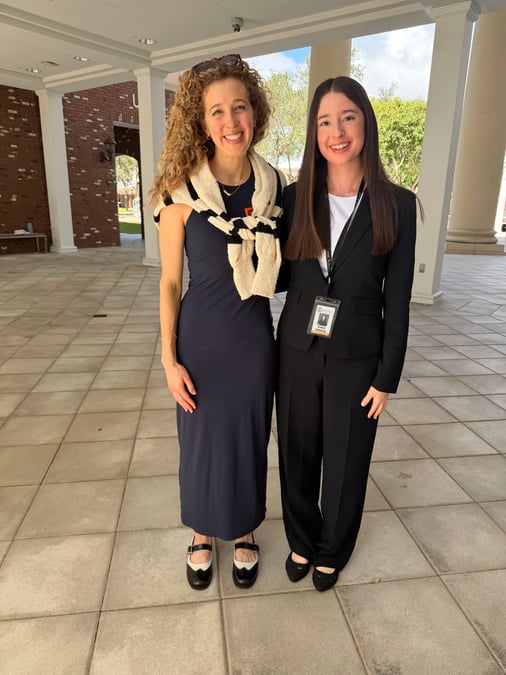 Dr. Danielle Gilbert ’04 and Eliana Nitsberg ’28
With each paper written, course taken, and project presented, Dr. Gilbert was able to acquire a multitude of skills that ultimately set her up for success in her endeavors after high school.
Dr. Gilbert was able to take those skills with her to Yale where she majored in Ethics, Politics and Economics. She continued to pursue her interest in the field of political science at the London School of Economics (LSE), where she majored in Comparative Politics, Nationalism and Ethnicity.
Throughout her studies at Yale and LSE, Dr. Gilbert always knew she was interested in continuing to research; however, what she wanted to research was not yet solidified. “I was not sure what I wanted to do next,” she said. “I knew that ultimately I wanted to earn a Ph.D. I wanted to do research, but I was also interested in politics and real-world policy-making.”
After making a move to Washington, D.C., Dr. Gilbert worked on Capitol Hill for four years, where she served in the legislative office of a Florida Congresswoman from 2009 to 2013. This experience expanded her knowledge of policy-making pertaining to international threats and foreign policy. “After that experience, I knew I was ready to go back to school to work toward my Ph.D,” she said. “I went to George Washington University (GW), where I eventually earned my Ph.D in political science. While I was there, I became fascinated by the very troubling international threat of hostage taking.”
At GW, Dr. Gilbert was able to take her compiled experiences in political science and hone in on her discovered specialty: kidnapping and hostage recovery. Throughout her research, she has conducted extensive interviews, including conversations with Colombian kidnappers and formerly held hostages during her study of the Colombian Civil War. “I started researching kidnapping in armed conflict, hostage taking and hostage recovery policy,” she said. “That work ultimately led me to write my dissertation on kidnapping in the Colombian Civil War.” Her dissertation earned the American Political Science Association’s 2021 Merze Tate Award, recognizing the best doctoral dissertation in international relations, law and politics.
Upon graduating from GW, Dr. Gilbert accepted a position teaching Military and Strategic Studies at the U.S. Air Force Academy and was an Edelson research fellow in U.S. Foreign Policy and International Security at the John Sloan Dickey Center for International Understanding at Dartmouth College. These two experiences set the stage for turning a research-based career into a synthesized field of both research and teaching.
With a desire to pursue research in hostage releases and her interests in the principles of negotiation, Dr. Gilbert was drawn to the interdisciplinary focus of Northwestern University. “There is a specialization in the study of political violence, which is precisely what I study,” she said. “There is a group of faculty in my department who study areas that are closely adjacent to what I study, which means that it is a very rich intellectual environment where I can collaborate with colleagues and we can engage with each other’s work.”
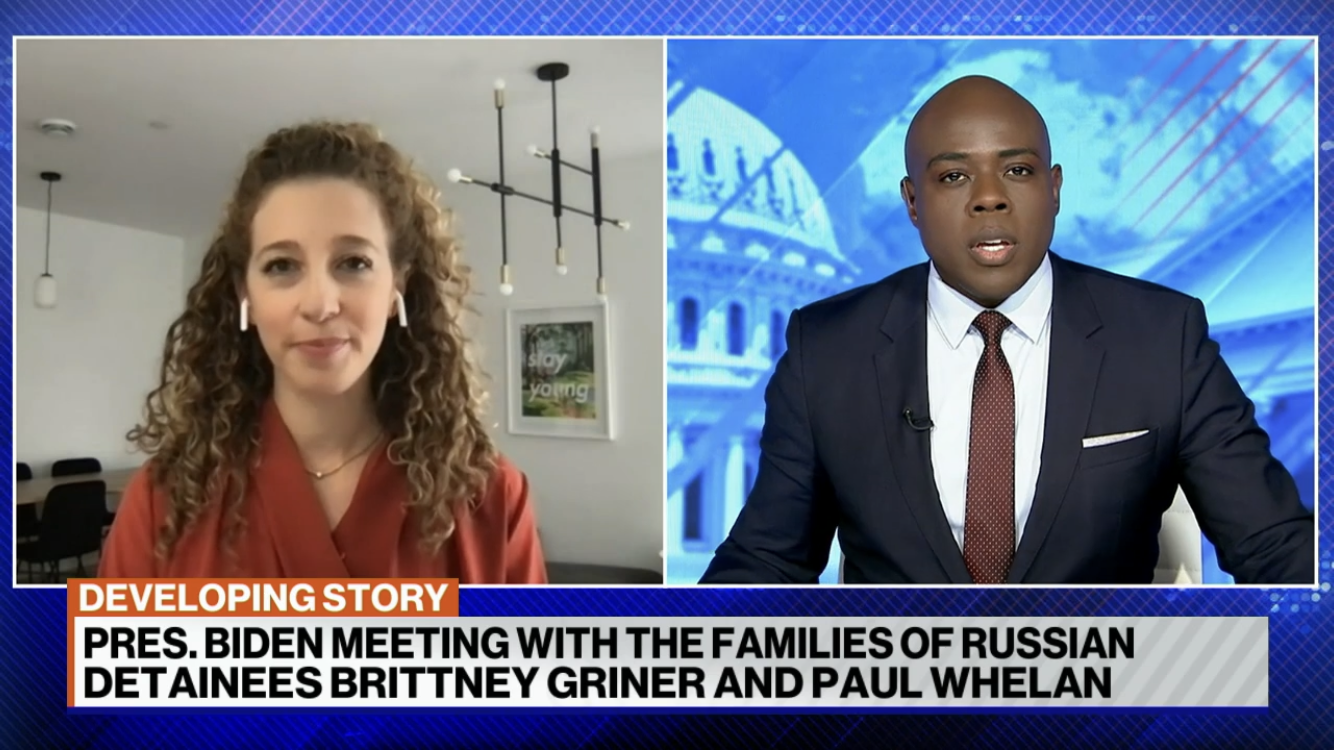
With each intricate case reviewed, each interview conducted and every class taught, Dr. Gilbert always relies on the fundamental belief that “research can improve real-world problems.” Her motivation to persevere through challenges stems from her desire to reach the public. To inform. To influence. To inspire.
Working with college students allows Dr. Gilbert to do just that. “College students are very special in a way that I think high school students are very special,” she said. “You're really at this point of transition from childhood to adulthood. And you get to grapple with these growing minds deciding who they want to be in the world. My goal is to see if I can change the way they see the world just a little bit.”