There are friendships that last because of shared memories. And then there are friendships that last because they are built on shared values. For Paula Tallman ’04 and Amy (Schnidman) Gerner ’04, those values first took shape at Pine Crest.
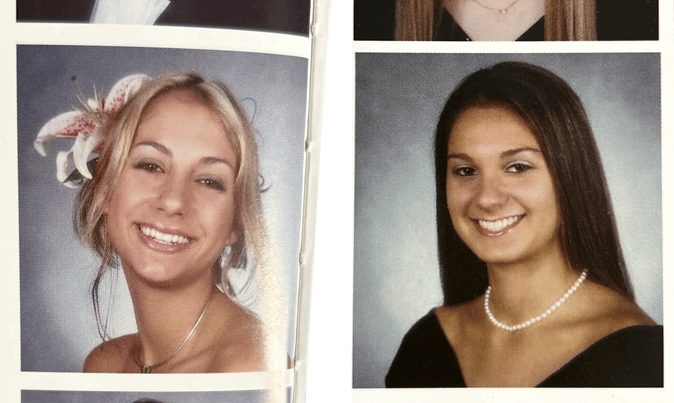 Paula Tallman ’04 and Amy (Schnidman) Gerner ’04
As teenagers, they found themselves drawn to many of the same opportunities. They played sports. They traveled as members of Model United Nations, where they learned to look beyond themselves toward the wider world. They admired teachers who challenged them to think critically, communicate thoughtfully and lead with purpose. Without realizing it, they were developing a habit that would stay with them long after graduation: when they encountered a problem, their instinct was not to ask, “Why did this happen?” but rather, “How can we make it better?”
Paula laughs when she talks about arriving at Pine Crest as a boarding student in 2000.
"I wasn't exactly the model student," she admitted. "I came in much more interested in having fun than academics." What changed wasn't one class or one assignment. It was the culture. "I became immersed in a place where doing well academically was the cool thing to do," she said. "People like Amy were kind, they were leaders, they were excellent students and athletes. Being surrounded by people who genuinely cared about doing well—and doing good—completely changed my trajectory."
For example, Upper School English teacher, Mr. Stephen Valentine, challenged Paula to enroll in honors courses because he believed she was capable of more. Outside of school, she traveled to the Amazon rainforest in Ecuador. There she learned that Indigenous communities were facing significant environmental and public health challenges, sparking a passion that would shape her life's work.
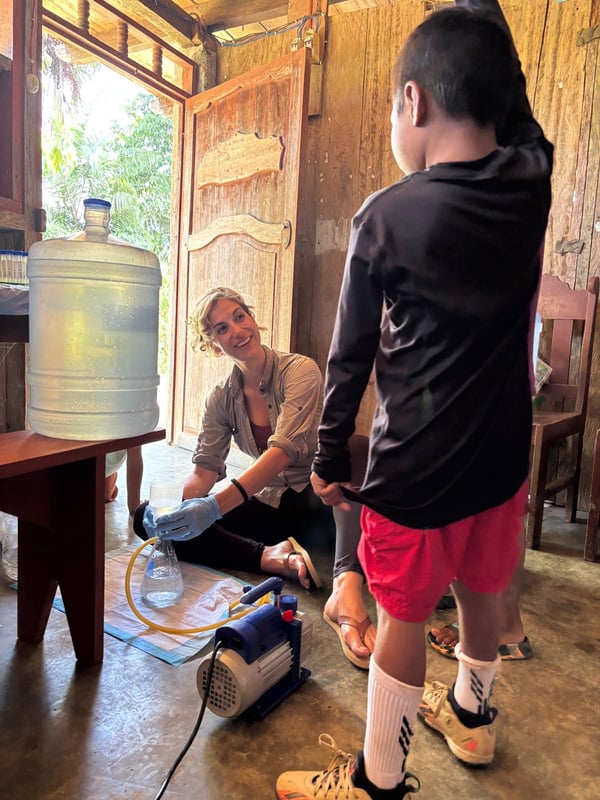 Paula conducts field work in the Peruvian Amazon
"I realized that if I wanted to spend my life helping solve these kinds of problems, I needed to get serious." So she did.
Today, Paula is an Assistant Professor of Anthropology and an Endowed Chair in the Gannon Center for Women and Leadership at Loyola University Chicago. Her work centers on improving human health and well-being through community-based research in places such as Peru and Indonesia. Amy works at CVS Health® at the intersection of strategy and execution, helping bring innovative women's health solutions from concept to reality. As an operator and implementer, she is driven by the challenge of turning complex problems into practical programs that create lasting impact.
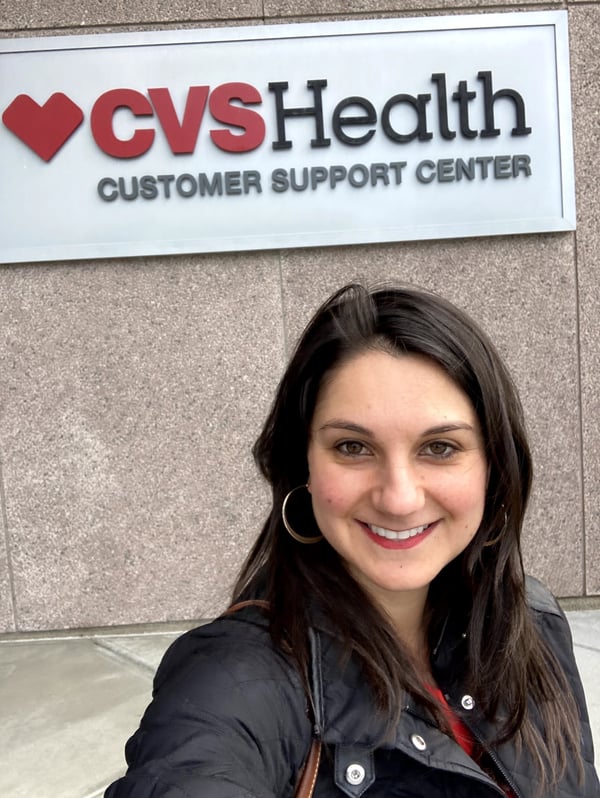
Although their careers unfolded differently, the values that first connected them remained remarkably similar. "I think Pine Crest gave us permission to think bigger," Amy said. "It wasn't just about succeeding, it was about asking how you could make a difference."
Their lives diverged after graduation, but their friendship never disappeared. Amy attended Georgetown University and Paula went to Johns Hopkins University. They met when they could throughout college and their early careers. Years later, they both landed in Massachusetts and reconnected more deeply as new mothers.
Paula's willingness to talk candidly about motherhood drew Amy back into her orbit. Soon they were navigating babies, careers and family life together. Eventually, Paula moved to Chicago for a tenure-track position at Loyola, but summers on Cape Cod continued to bring their families together. Staying connected required effort, and they made it.
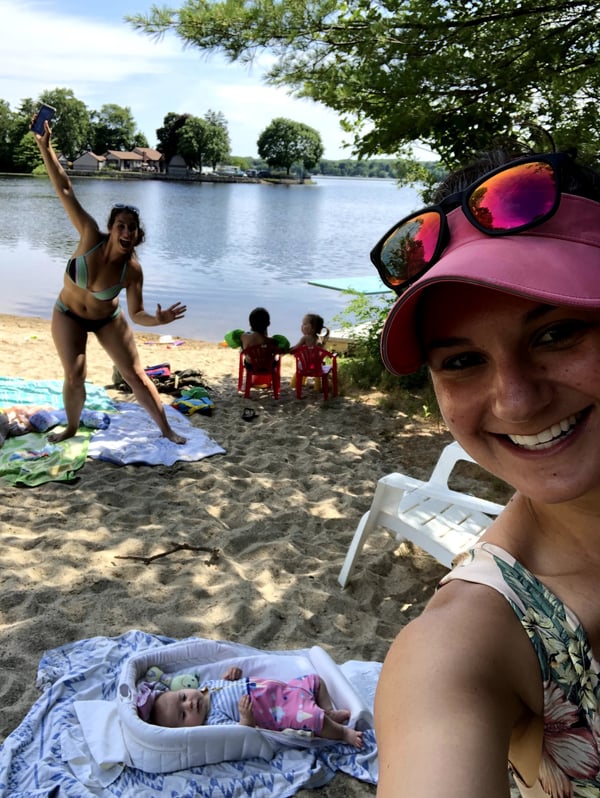 Paula and Amy with their children in Sharon, MA
"We always made the extra effort to stay connected," Paula said. "Those friendships don't disappear. They're always there waiting for you." Neither realized just how important that friendship would become.
In August 2023, Paula was diagnosed with triple-negative breast cancer at age 37. As she began treatment, Amy immediately reached out—not only as a friend, but as someone who worked in health insurance. "If you run into any issues navigating your benefits," Amy told her, "I'm here."
For the most part, Paula's experience with her insurance was overwhelmingly positive. The cost of chemotherapy, surgeries and specialized treatments never became another burden during an already overwhelming time.
One experience, however, stood apart. After being told her insurance covered a wig, Paula purchased one, completed the paperwork and submitted her claim. It was denied because the wig supplier was considered out-of-network. She spent hours calling customer service, trying to locate an approved wig supplier, only to discover many of the suggested resources didn't actually offer wigs. "It wasn't that the benefit didn't exist," Paula said. "It was that actually using it was incredibly difficult."
The wig itself mattered in ways she had not anticipated. Paula was comfortable with her shaved head, but her young children were less comfortable with the questions it invited. A well-designed wig allowed her to move through some parts of her life without her illness becoming the first thing people saw.
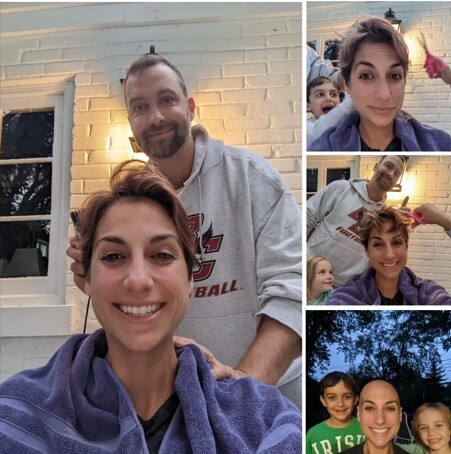 Paula chronicles losing her hair after her breast cancer diagnosis
When Amy asked how her experience with Aetna®, a CVS Health® company had been, Paula told her it had been excellent—with this one exception – the wig reimbursement. "We could solve this just for Paula as a one-off," Amy said. "Or we could dive deeper to unpack the complexities to solve it for all Aetna members." Paula was unequivocally behind the second option.
Over the next year, Amy assembled colleagues from across CVS Health® and Aetna®, from departments spanning network management, product, operations, customer experience and medical policy, with the goal of understanding why the barrier existed and how it could be removed.
Paula, meanwhile, did what she has spent her career teaching others to do. She documented the experience. She wrote a detailed testimonial. She gathered photographs. She revisited moments from her treatment that were difficult to relive. She documented not only what had happened but why it mattered. She described the emotional weight of losing her hair, the importance of finding a wig that helped her children see their mother as they knew her and the frustration of navigating a process that was supposed to make an already difficult journey easier. "My research has always been about listening to people's stories and using evidence to create change," Paula said. "I never imagined those same skills would become so personal."
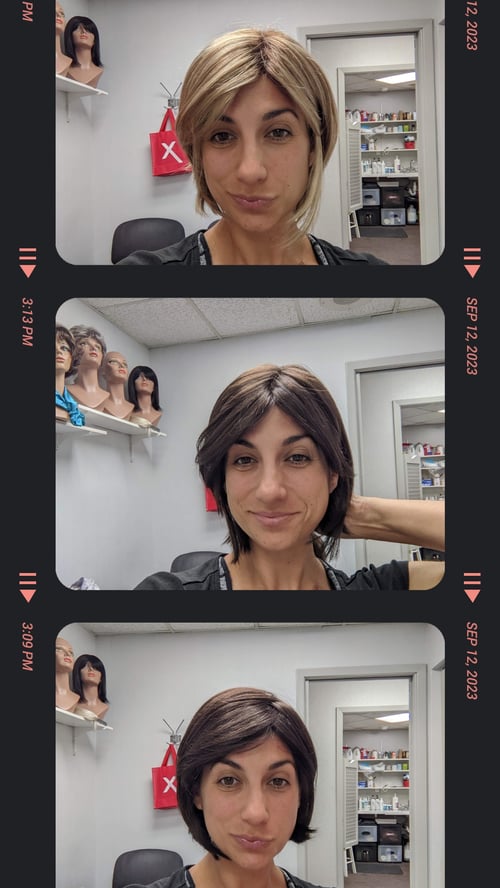 Paula tries on wigs
That required a vulnerability she is not sure she would have offered to a stranger. "This only happened because Amy reached out," Paula said. "Because of our deep friendship from Pine Crest, then through motherhood, I felt comfortable and empowered in the worst time of my life."
Amy understood the value of what Paula was giving them. "We were taught all the things," she said of their Pine Crest education. "We are good communicators, good writers and good storytellers. We understood how to get to the point to make change." The photographs and testimony provided by Paula transformed an administrative problem into a human one.
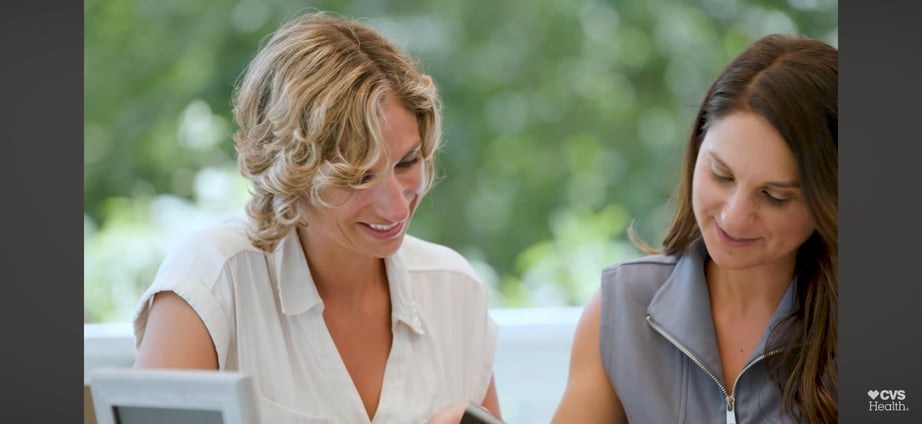 Image courtesy of CVS Health: Paula and Amy
After more than a year navigating and building out potential solutions, the new wig benefit enhancement went live. Now eligible Aetna® commercial members have a streamlined process allowing qualifying out-of-network wig purchases to receive in-network level treatment up to the benefit maximum, removing the hurdle that Paula had encountered.
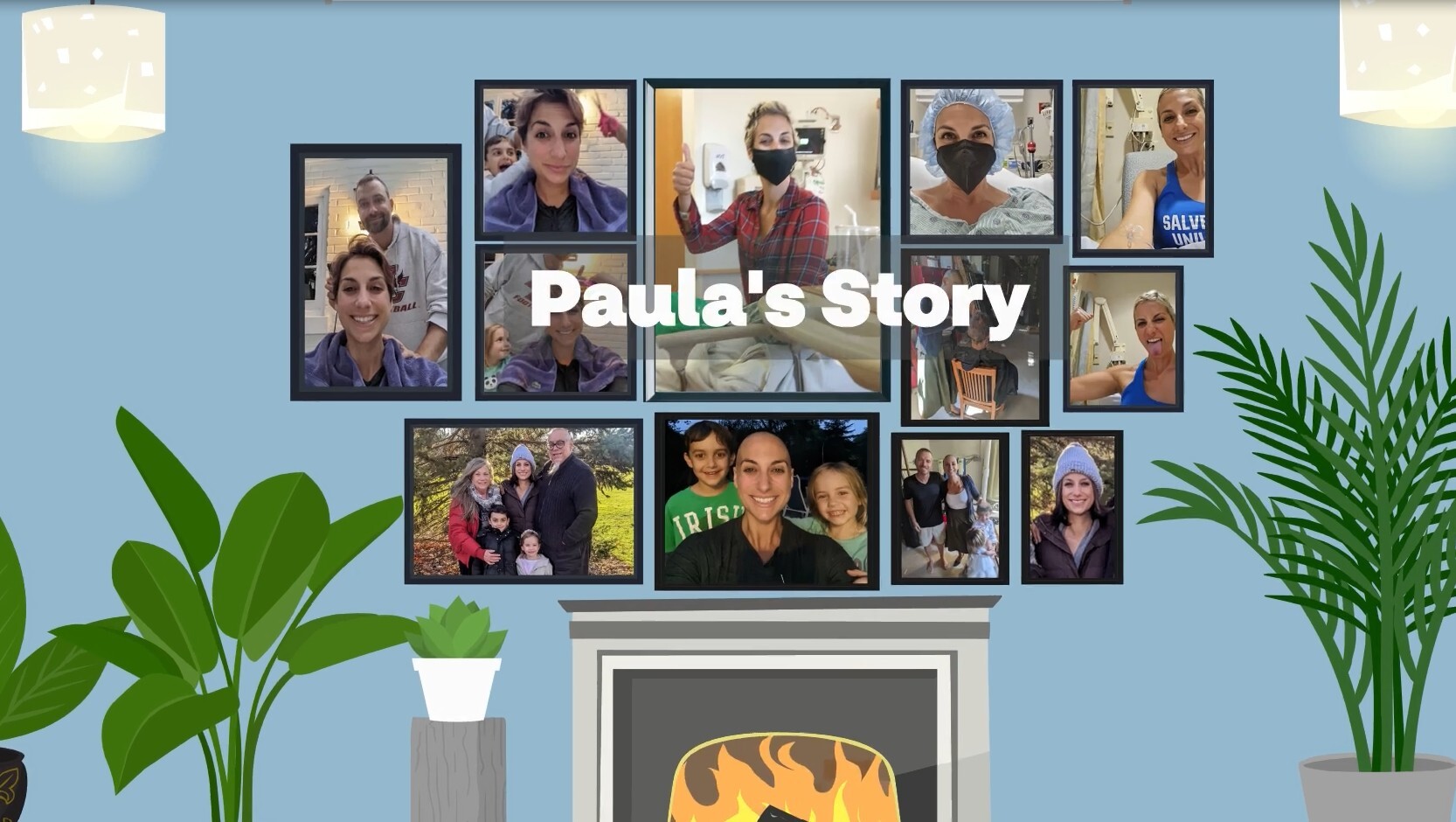
Image Courtesy of CVS Health
But by then, the project had become much larger than reimbursement for a wig. Paula's story became part of a customer service training initiative called Project Paula Joyce, named for Paula and Joyce, an oncology nurse navigator. The training eventually expanded to navigate customer service on the coverage options for other parts of the breast cancer journey, including mastectomy bras, genetic screening, emotional support and care navigation.
Amy and her colleagues wanted frontline employees to understand not simply the rules governing a benefit, but the person on the other end of the phone. CVS Health's® response to the project affirmed something she believed deeply: seemingly small problems can have enormous human consequences. "Doing the right thing to help simplify our processes mattered.” she said.
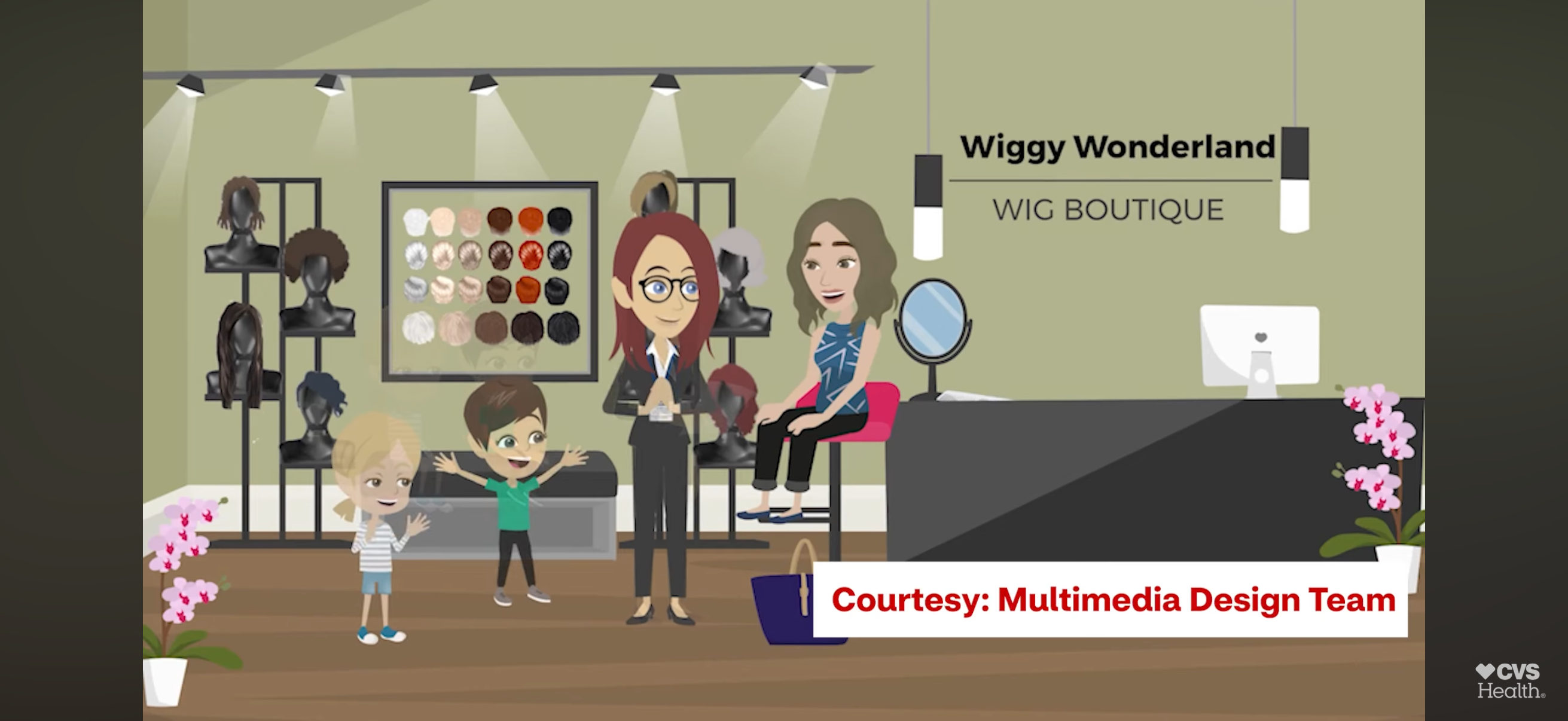 Image courtesy of CVS Health
The work has since begun to travel beyond Aetna. While giving a talk at Northwestern University, where Paula completed her Ph.D, she encountered a former classmate who works for another national insurance company. He recognized her from the Aetna® story and told her their work was being shared as an example, as the organization considered its own approach to wig reimbursement. "We will probably never fully measure or understand the wider impacts of our collaboration," Paula said.
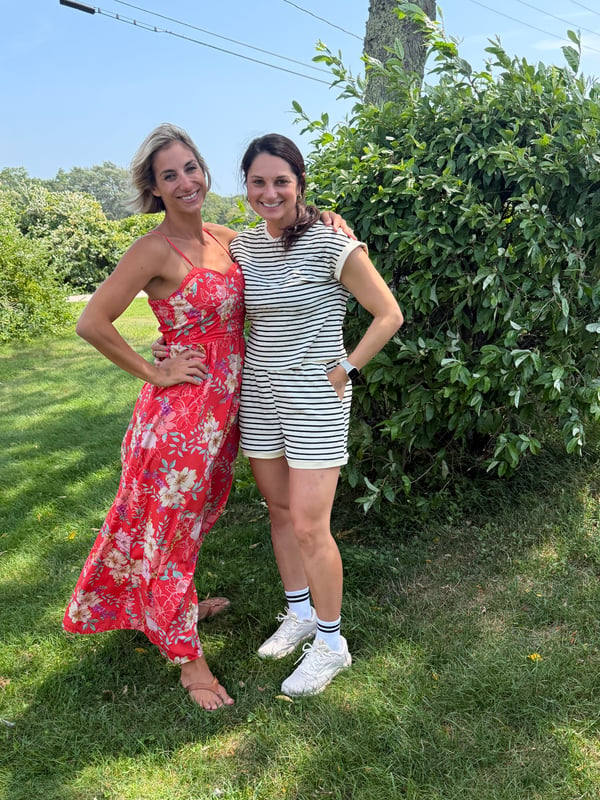 Paula and Amy during their annual summer Cape Cod trip, August 2026
Both women have also received significant professional recognition for work rooted in those same values. This year, Paula received the Setha M. Lowe Award for Engaged Anthropology, among the highest honors in her field for community-based scholarship. Her application for the award was primarily based on her years of action research in Peru, where she works with communities experiencing severe water insecurity. However, it concluded by describing how her training in engaged approaches led to unexpected systems-level change in the Aetna® wig benefit enhancement project, which will help countless people in navigating hair loss.
Amy received a CVS Health® Paragon Award, among the company's highest employee honors, for work that creates meaningful and lasting impact. For Amy, the award was an affirmation of something larger than a single policy change. "We're not solving something just for one," she said. "We're solving for the many."
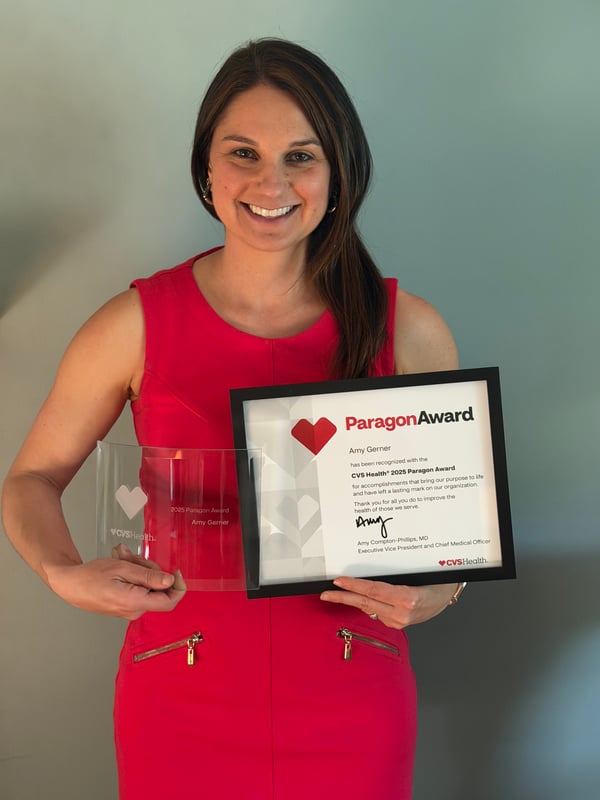
Amy had watched colleagues from across a large organization voluntarily devote their time and expertise to the project because they understood the person behind it. What began as a friend's frustrating experience had become a collective effort to do better.
Her takeaway from the experience is deceptively simple. "You've got to stay curious, and you've got to do the right thing," she said. "And you have to find the right people to do the right thing together to go farther."
More than 25 years ago, Amy and Paula were Pine Crest students sitting together in Model United Nations, discussing global health and imagining how problems affecting other people might be solved.
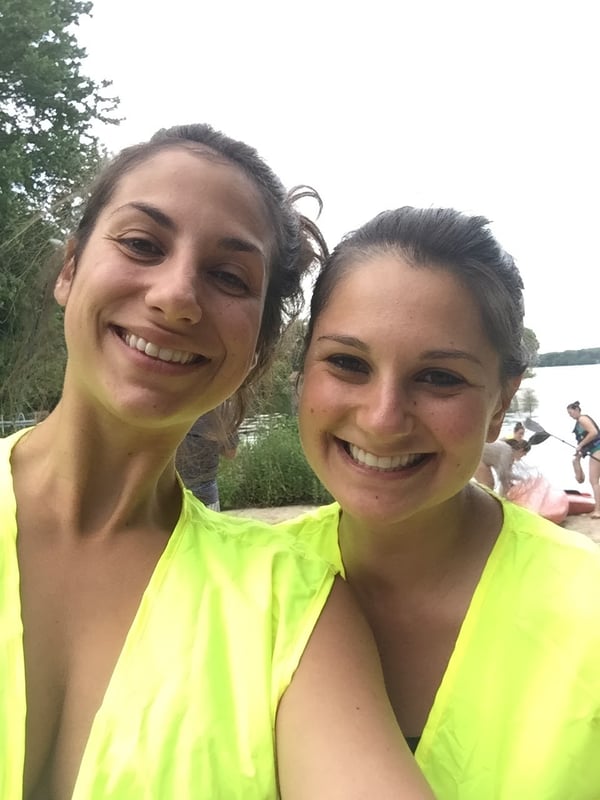
Paula and Amy kayaking on Lake Massapoag
Today, Paula studies the experiences of marginalized communities around the globe, gathering evidence and stories to advocate for change. Amy works within our nation's complex healthcare system to identify problems and build solutions that can reach people at scale. Both have built careers around a version of the same instinct they were cultivating as teenagers. "Do good things, work hard, expand, keep reaching for new things."
Looking back, Paula sees Pine Crest as the place where many of those instincts first took root: in teachers who expected more from her, classmates whose example challenged her, experiences that expanded her understanding of the world and friendships that endured long enough to become something much larger than either woman could have predicted.
Amy sees it similarly. Those formative years, she said, helped them understand "what does it mean to do more" and gave them the confidence to believe they could create lasting change.
To learn more about their work together check out the video and article here: The breast cancer patient who inspired a policy change | CVS Health®