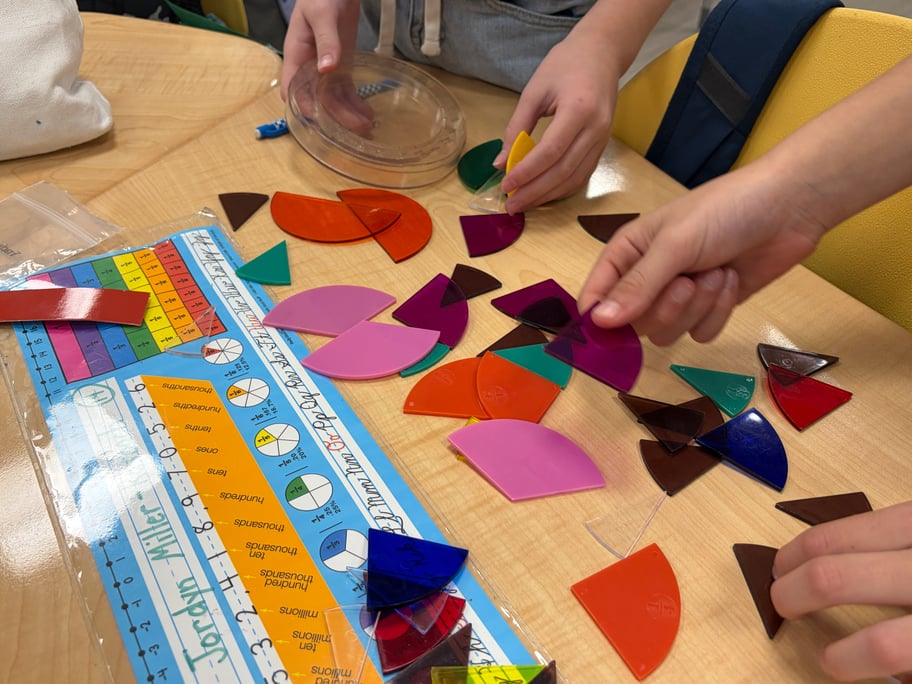
At Pine Crest, some of the most important investments are the ones that shape learning across every classroom.
Through support for schoolwide priorities, philanthropy allows the school to respond to what students need most in real time, strengthening curriculum, expanding resources and empowering faculty to continuously refine how they teach. In math classrooms across campuses, that investment is helping students build confidence as problem solvers.
For Lower School Head Mr. Jason Foreman and Lower School Math Teacher Mrs. Gerin Harris, the goal is clear: help students see math as a way of thinking that applies everywhere.
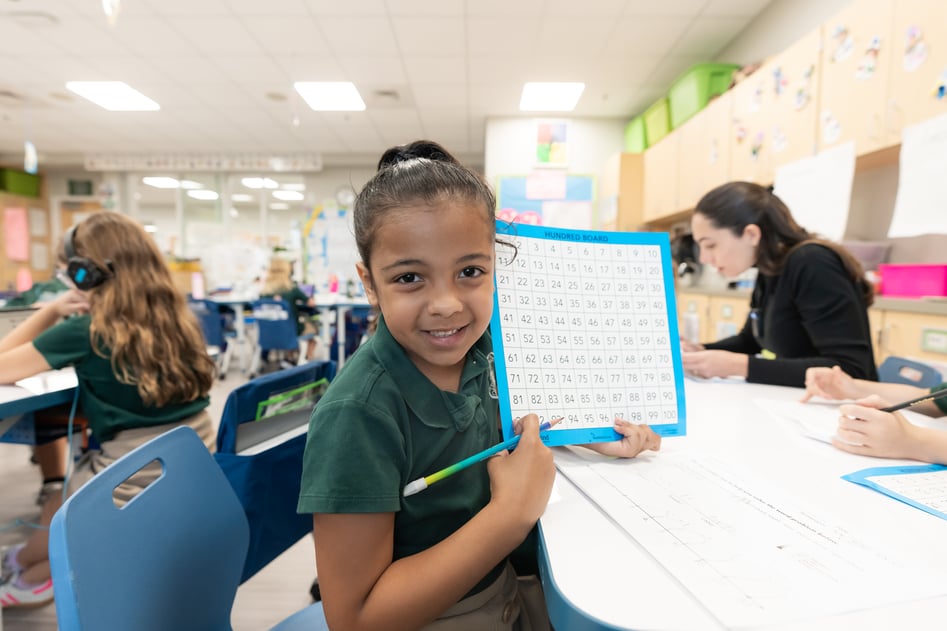
“We start with the premise that math is everywhere,” said Foreman. “It’s not isolated to a lesson or a worksheet. It’s about developing a problem-solving mindset that students can carry into any situation.”
That mindset shapes how math is taught each day. Rather than focusing on a single method or memorized steps, students are encouraged to approach problems in multiple ways, explain their thinking and learn from one another.
“It’s not just about getting the correct answer,” Mrs. Harris said. “It’s about reasoning, making sense of the problem and understanding how different strategies can lead you there.”
This approach reflects a broader shift in math education. Where many adults experienced a single prescribed path to a solution, today’s students are given a toolkit of strategies, allowing them to think more flexibly and build confidence in their own process.
That confidence is reinforced through classroom practices designed to make thinking visible. Lessons often begin with “number talks,” where students respond to prompts by sharing what they notice and wonder. These conversations create a low-risk entry point, encouraging participation and helping students see that there are many ways to approach a problem.
Over time, that culture takes hold.
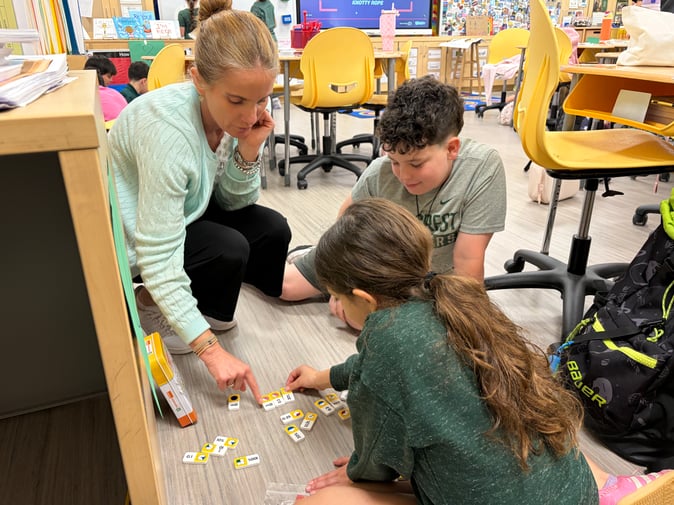
“At the beginning of the year, some students are hesitant to share,” Mrs. Harris said. “But as they see that there isn’t just one right way to think about something, they become more willing to take risks. That’s when the growth really happens.”
That growth is supported by a classroom environment intentionally designed for collaboration. From flexible seating to shared workspaces, students are encouraged to work together, test ideas and learn from different perspectives.
“When you walk into a classroom, the setup itself sends a message,” Mr. Foreman said. “It tells students that learning is collaborative, that there are multiple ways to think and that their voice matters in the process.”
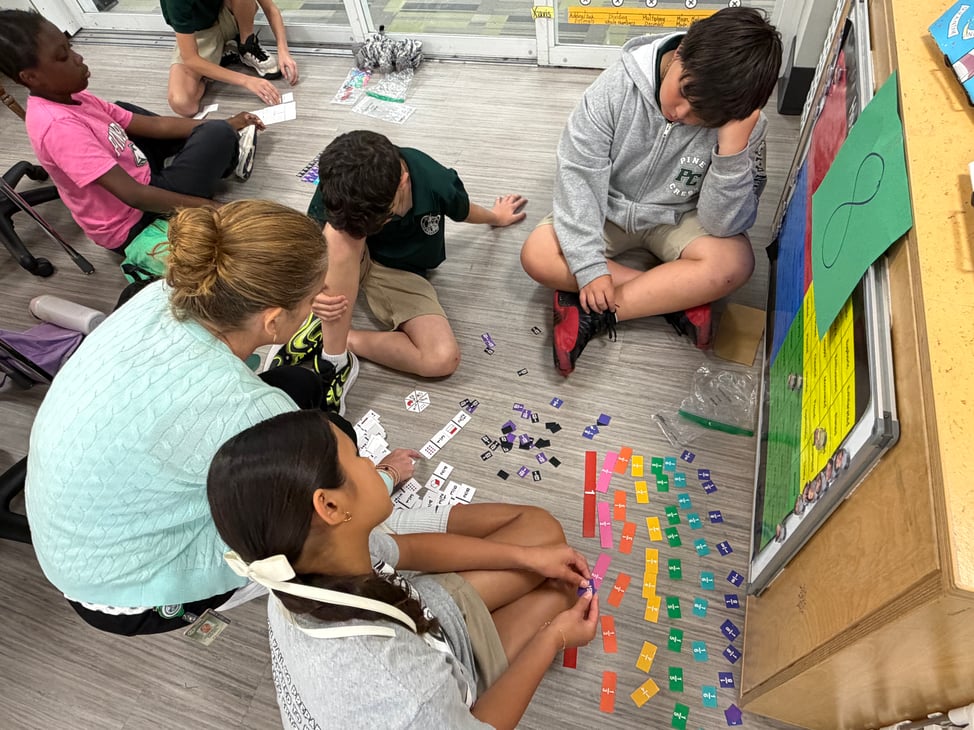
Philanthropic support for schoolwide priorities plays a critical role in making this environment possible.
It provides the resources that enhance instruction, from classroom materials and interactive tools to shared experiences that bring concepts to life. It supports structures that allow teachers to collaborate, refine their approach and respond to the evolving needs of their students. It also creates the flexibility to introduce new ideas and expand opportunities, whether through cross-disciplinary connections or enrichment experiences like the growing interest in math competitions and clubs.
For students, the impact is tangible.
“Our students are excited about math,” Mrs. Harris said. “They’re engaged, they’re talking, they’re thinking like mathematicians. That excitement builds confidence, and that confidence carries into everything they do.”

That confidence is ultimately the goal. At Pine Crest, math is not just about numbers. It is about developing thinkers who can approach challenges with curiosity, persistence and a willingness to try.
Through support for schoolwide priorities, donors make it possible for that work to happen every day, across every classroom, ensuring that students are equipped not only with knowledge, but with the skills and mindset to apply it wherever they go.