Virtual reality (VR) is often thought of as a modern technology, but Tatjana Crossley ’07 sees it as something much older.
Long before headsets and digital worlds, Tatjana posits that humans were creating immersive environments centuries ago to transport themselves beyond their immediate surroundings. Paleolithic cave paintings, Roman frescoes and theatrical spaces all sought to reshape perception, blur the boundaries between observer and environment and create experiences that felt larger than everyday life.
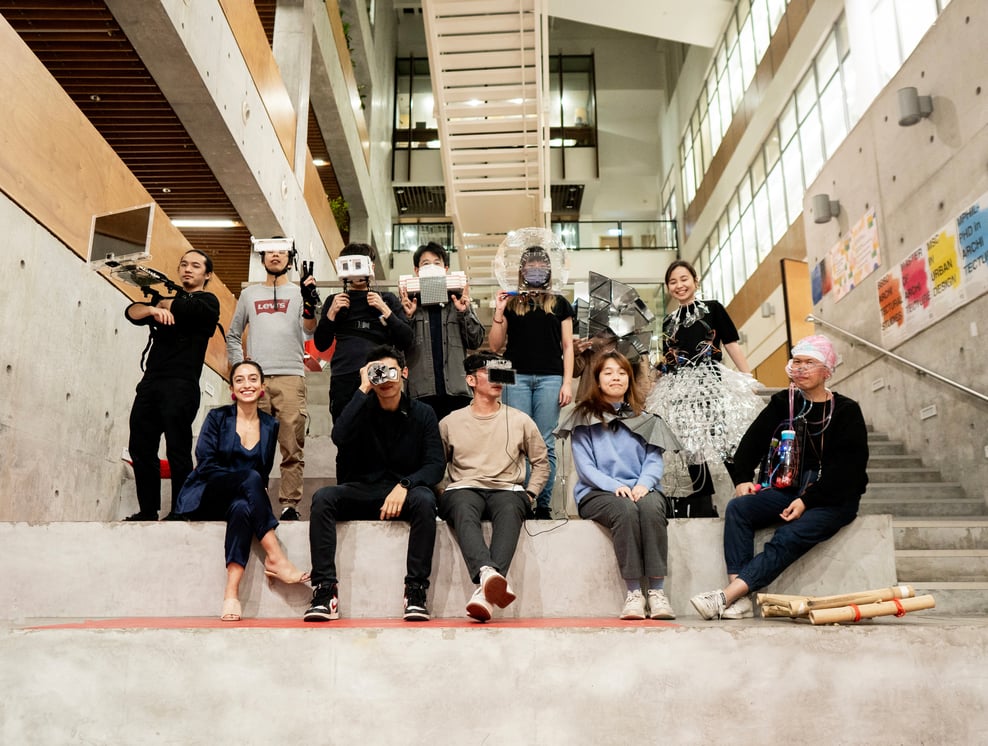 Tatjana Crossley ’07 (front row, first on the left)and her team at ArchiTAG
It is a perspective that has shaped Tatjana’s career as an architect, researcher, educator and author. A graduate of Rice University, Harvard University and the Architectural Association School of Architecture in London, Tatjana is currently working as an Assistant Professor at Wentworth Institute of Technology in Boston, the co-founding partner of the architecture research practice ArchiTAG, and author of the book titled “Virtual Reality: Architecture, Culture and the Body" (Routledge, 2026).
Her work explores the intersections of architecture, culture, history, art, media and immersive environments, examining how people experience space and how those experiences reflect the values of a particular time and place. “People don’t generally relate the breadth of architectural history to contemporary design,” Tatjana said. “With a lot of my work, what I’m trying to show is that there is coherence between the two, that what we design in the contemporary is deeply tied to history.”
That historical lens is central to how she approaches virtual reality. Rather than viewing VR purely as an emerging technology, Tatjana sees it as the latest expression of a much older human impulse. “What I work to demonstrate in my book, for example, is that humans have always been driven, for whatever reason, to create these immersive virtual environments,” she said. “Today, we have these VR headsets and digital pixels, but there have been many manifestations of immersion throughout history.”
Among the examples she studies are the prehistoric Caves of Lascaux, a UNESCO World Heritage site in France housing Paleolithic cave paintings estimated to be 17,000-20,000 years old. “These early cave people were drawing pictures of their rituals and practices, and most of the time these drawings were not situated in an easily accessible spot; they seemed to be deliberately tucked away deep into the cave, where you could only see them under flame light, to create these very distinct, choreographed experiences.”
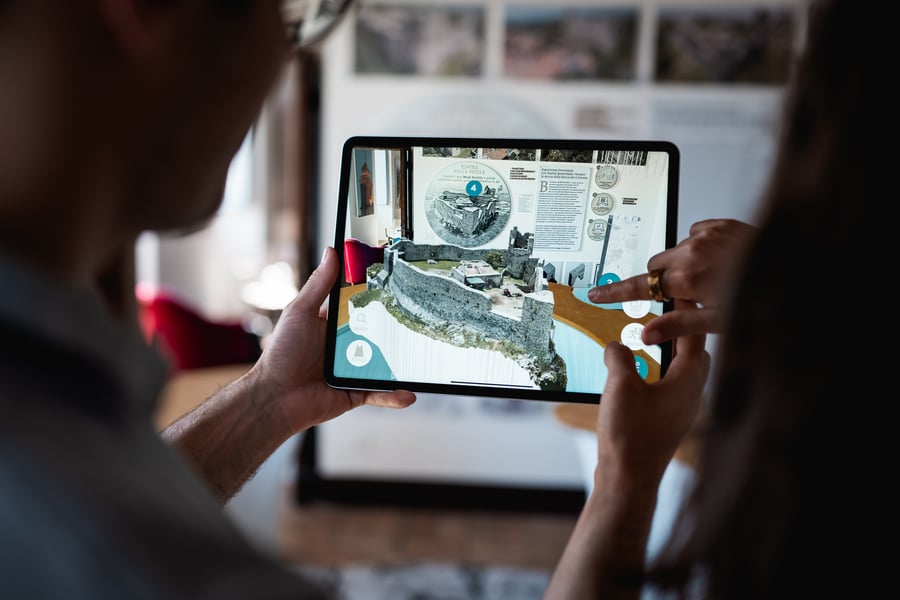 A virtual reality scape designed by ArchiTAG
She offers the fresco paintings in Rome as another example. “With those paintings, you can physically see the care taken by the painters to create depth in unique ways, even though they didn’t have linear perspective. They used a different kind of perspectival strategy and different ways to create immersion into space,” says Tatjana. “Over time, you see several versions of this. I argue that virtual reality is a means of producing an immersive experience that has had multiple media throughout our history. In a contemporary context, that media exists to challenge how people experience other environments or process different types of information.”
Tatjana explains that while VR is a key element in her research and teaching, she is increasingly using augmented reality (AR) for her work, which layers digital information onto the physical world rather than replacing it entirely. The distinction reflects a larger question that runs throughout her work: how people navigate the relationship between physical and constructed environments.
For Tatjana, understanding these technologies requires moving beyond the assumption that virtual experiences are somehow less meaningful than physical ones.
“When we talk about VR, many people automatically think of it as a false reality,” Tatjana said. “In my research, I preface it as an alternate reality. We can't say one is real and one is not because both are real; both are experiences that people are having. That is why I don’t distinguish between real and false; we simply have different realities that are produced within the context of our environments, and what we value in the moment.”
Sharing what Tatjana believes are the driving societal values of today based on her experience, she explains that there is a big drive toward community and activism. “A lot of avenues you see using VR at the moment are about creating some sort of community,” she said. “We see it largely in the gaming world, but it is not exclusive to that. Generally, there is a sense of collaboration among people all over the world. There are a growing number of platforms, like Decentraland and Sunken Blimp, that provide collective VR spaces, and their primary focus is about bringing people together. Because platforms like this are digital, they’re not beholden to the same laws of physics, so you could potentially have portals and overlaps and funny moments of intersection between spaces that we won’t see in the physical world. I find that to be another interesting area of study; how we tend to superimpose these laws that apply to the things we’re all very familiar with in spaces that don’t require those same logics.”
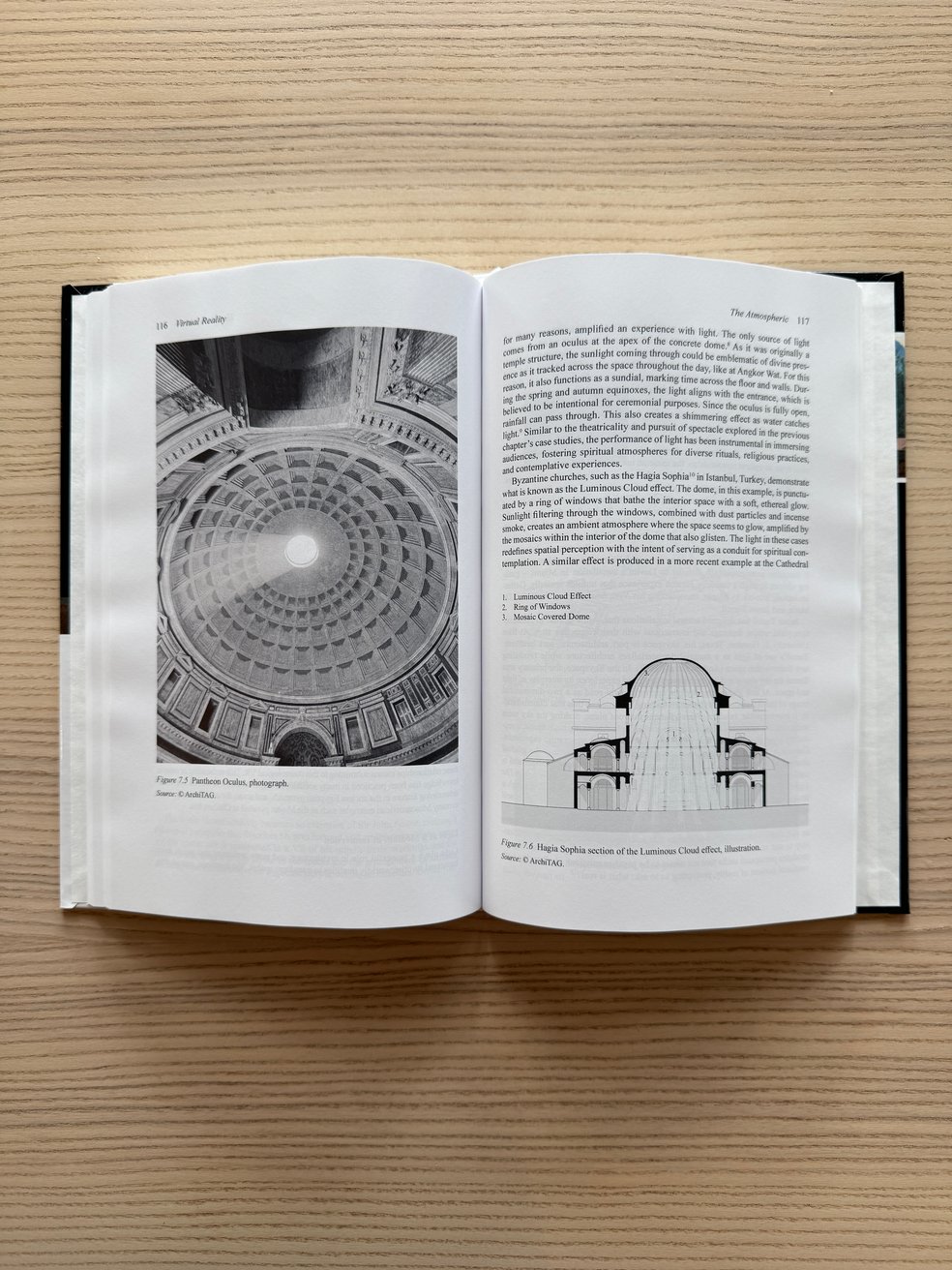 A look at Tatjana's book, “Virtual Reality: Architecture, Culture and the Body” (Routledge, 2026)
This perspective is particularly relevant as virtual and augmented technologies continue to influence how people connect, learn and preserve knowledge. Many of Tatjana’s projects focus on expanding access to information, creating community and preserving cultural heritage.
“There have been many conversations about how VR can be used to give people access to information that was once inaccessible to them, like the presentation of different artifacts and museum spaces, for example,” she said. “We can also use these technologies to scan and map out historical sites that have been tragically altered or destroyed. There is a sense of using VR, AR and even AI to help preserve history and shared knowledge.”
While Tatjana’s work and studies span centuries of architectural history and emerging technologies, she acknowledges that it was actually her time as a student at Pine Crest that sparked her desire to explore how immersive environments, history, art and architecture engage with the body and the human experience. “I enrolled at Pine Crest in first grade because my parents were attracted to the opportunities the school afforded, coupled with a well-rounded education,” she said. For me, though, the most impactful experience I had was through the arts and having the ability to be creative. I became engrossed in as many of the art offerings as I could; visual arts, orchestra, musicals, chorus and ballet. As someone who considered themselves awkward in school, the creative side of Pine Crest gave me a community, and for the first time I felt as though I was among my people, and that I belonged. I had wonderful teachers who inspired all of us, and encouraged us to just be ourselves.”
The connection between those artistic experiences and her eventual career may not seem obvious, but for Tatjana, the relationship is clear.
“Design itself is such a creative practice, and being immersed in the arts informed how I came to where I am now,” she said. “Perhaps ballet and architecture seem completely unrelated, but in reality, while they are practices that manifest themselves differently, they have the same goal. In architecture, we are designing spaces that choreograph movement; in ballet, we are using choreographed movement to form identities and tell stories and show the audience the ways we can interact with space.”
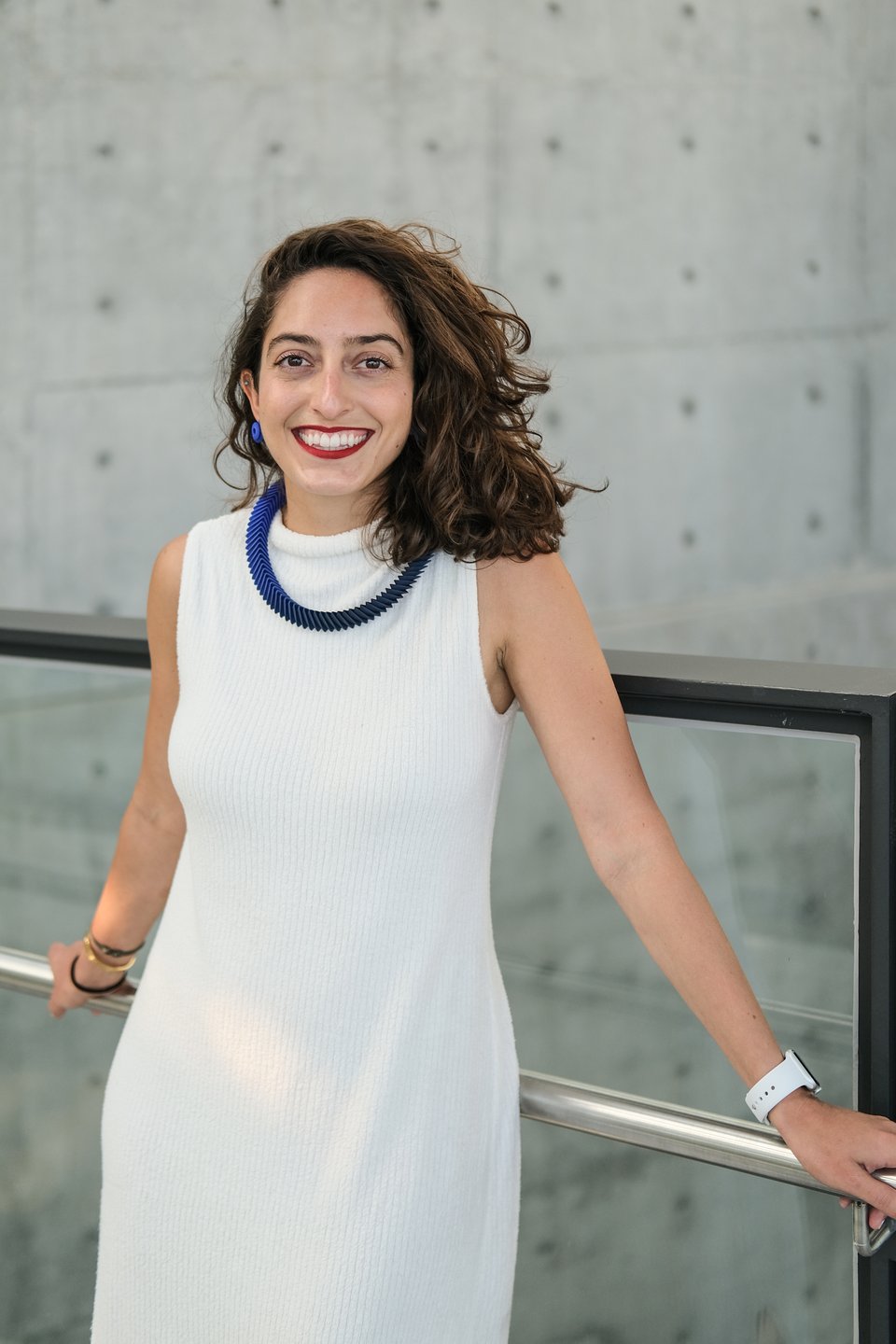 Tatjana Crossley ’07
Urging young people to have the courage to challenge norms and think critically, Tatjana stresses the importance of absorbing knowledge from all aspects of your education and life. “I feel that these days, we are so programmed to think methodologically and scientifically, in a very structured way. There isn’t anything wrong with that, because we are all going to need those skills to successfully engage with our environment moving forward. But it can sometimes feel restrictive. My hope for the future is that young people continue to value things like poetry, literature and art because they ask you to think in a different way. We should not take those things for granted, especially in this era of emerging technologies. Critical thinking, breaking the rules and a willingness to push back against standards and norms is the very foundation for innovation. That is what drives humanity forward!”
